
| HOME CONSCIOUSNESS UFOs PHOTOGRAPHY CROP CIRCLE RESEARCH PRESENTATIONS FARM MONITOR FUTURE EARTH STORE MEDIA BIOGRAPHY 2012 DEBATE CLIMATE CHANGE QUOTATIONS LETTERS BLOG CONTACT OBSERVATORY WELLNESS |


| PHOTOGRAPHY - ARCHAEOLOGICAL PAGE 2-2 Return to page 1 |





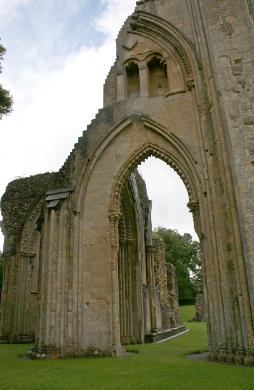
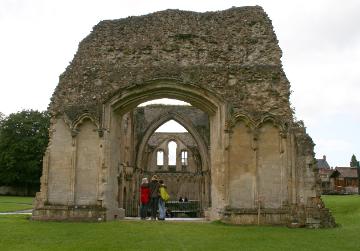
| Glastonbury Abbey The abbey was founded in the 7th century and enlarged in the 10th. It was destroyed by a major fire in 1184 but subsequently rebuilt and by the 14th century was one of the richest and most powerful monasteries in England. The original Medieval floor tiles can be seen (above). More below. |
| Castlerigg, the Lake District, England is one of around 1,300 stone circles in the British Isles and Brittany, it was constructed as a part of a megalithic tradition that lasted from 3,300 to 900 BC, during the Late Neolithic and Early Bronze Ages. |
| Ancient rock glyphs in Arizona |
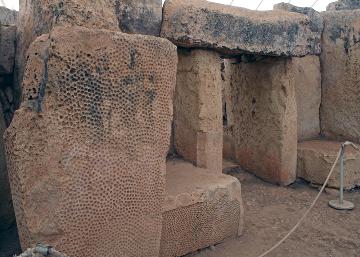

| Malta - The temple of Hagar Qim (c. 3600 - 3200 BC) stands on a hilltop overlooking the sea and the islet of Filfla. |
| West Kennett Longbarrow, Wiltshire, England. The construction of the West Kennet Long Barrow commenced about 3600 BC |
| Malta - The temple of Hagar Qim (c. 3600 - 3200 BC) stands on a hilltop overlooking the sea and the islet of Filfla. |



| OLD SARUM CASTLE The great monoliths of Stonehenge and Avebury were erected nearby and indications of prehistoric settlement have been discovered from as early as 3000 BC. An Iron Age hillfort was erected around 400 BC, controlling the intersection of two native trade paths and the Hampshire Avon. The site continued to be occupied during the Roman period, when the paths became roads. The Saxons took the British fort in the 6th century and later used it as a stronghold against marauding Vikings. The Normans constructed a motte and bailey castle, a stone curtain wall, and a great cathedral. A royal palace was built within the castle for King Henry I and was subsequently used by Plantagenet monarchs. This heyday of the settlement lasted for around 300 years until disputes between the Wiltshire sheriff and the Salisbury bishop finally led to the removal of the church into the nearby plain. As New Salisbury grew up around the construction site for the new cathedral in the early 13th century, the buildings of Old Sarum were dismantled for stone and the old town dwindled. Its long-neglected castle was abandoned by Edward II in 1322 and sold by Henry VIII in 1514. |
| The hilltop at Old Sarum shows evidence of Neolithic settlement as early as 3000 BC.There is evidence that early hunters and, later, farming communities occupied the site. A protective hill fort was constructed by the local inhabitants around 400 BC during the British Iron Age by creating enormous banks and ditches surrounding the hill. The hillfort is broadly oval shaped, measuring 400 m (1,300 ft) in length and 360 m (1,180 ft) in width. The archaeologist Sir R.C. Hoare described it as "a city of high note in the remotest periods by the several barrows near it, and its proximity to the two largest stone circles in England, namely, Stonehenge and Avebury. At the time of the Roman conquest of Britain in the 1st century, the area of Old Sarum seems to have formed part of the territory of the Atrebates,[12] a British tribe apparently ruled by Gaulish exiles. Cynric, king of Wessex, captured the hill in 552.[3] It remained part of Wessex thereafter[18] but, preferring settlements in bottomland like nearby Wilton,[2] the Saxons largely ignored Old Sarum[19] until the Viking invasions led King Alfred to restore its fortifications |
| Remains of the outer wall of 'Old Sarum Castle', the orginal city of Salisbury, Wiltshire, England. Close to my home of Andover. |
| Glastonbury Abbey, Somerset, England. Glastonbury Abbey The abbey was founded in the 7th century and enlarged in the 10th. It was destroyed by a major fire in 1184 but subsequently rebuilt and by the 14th century was one of the richest and most powerful monasteries in England. The original Medieval floor tiles can be seen six rows up page. |
| Canyon DeChelly, Arizona. This archway reveals the Canyon as the track cuts through a tunnel into the snaking track down along the face of the cliff onto the floor. Some ancient glyphs can be found there. Amazing trek in astounding scenery. |
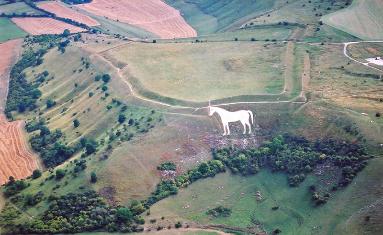
| This is one of the famous white horses cut into chalk hillsides of Wiltshire, England. The horse was restored in 1778, obliterating a previous horse which had occupied the same slope.This is the Iron Age hill fort where surveillance operation Blackbird was held in 1990. |
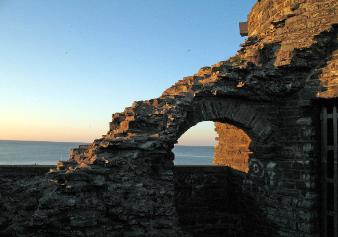
| Aberystwyth Wales, an Edwardian fortress built during the First Welsh War in the late 13th century.Building work started in 1277. It changed hands at least three more times before being capturedl by the Welsh prince Llywelyn the Great in 1221 |
| Chichen Itza, Yukatan, Mexico was a large pre-Columbian city built by the Maya people. Late Classic (c. AD 600–900) through the Terminal Classic (c. AD 800–900) and into the early portion of the Postclassic period (c. AD 900–1200).Chichen Itza was one of the largest Maya cities and it was likely to have been one of the mythical great cities, or Tollans, referred to in later Mesoamerican literature. |
| Chichen Itza, Yukatan, Mexico |
| San Gervasio-Yucatan. The site was constructed during: Terminal-Classic (1000-1200 AD) but this modern arch was built in recent years. Saq Be at San Gervasio Mayan Temple Ruins, is an archaeological site of the pre-Columbian Maya civilization located in the northern third of the island of Cozumel off the northeastern coast of the Yucatán Peninsula. |


| Queen Elizabeth II (then Princess Elizabeth) and Prince Philip spent their honeymoon at Broadlands in November 1947; Earl Mountbatten, whose home Broadlands was at the time, was Philip's uncle.[2] In 1981, the newly married Prince and Princess of Wales also spent the first three days of their honeymoon at Broadlands. CA: I had many responsibilities in the town of Romsey and surrounding Broadlands and met with Earl Mountbatten right up to the time that the IRA assasinated him. I was privaledged to take photographs of Prince Charles and Princess Diana arriving and departing the estate for their honeymoon. Arriving top left. |
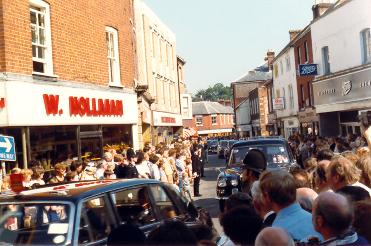
| Lord Mountbatten: Admiral of the Fleet Louis Francis Albert Victor Nicholas Mountbatten, 1st Earl Mountbatten of Burma, coffin returns to his home town of Romsey for burial at Romsey Abbey. He was uncle of Prince Philip, Duke of Edinburgh, and second cousin once removed to Elizabeth II. During the Second World War, he was Supreme Allied Commander South East Asia Command (1943–46). He was the last Viceroy of India (1947) and the first Governor-General of the independent Dominion of India (1947–48), from which the modern Republic of India was to emerge in 1950. From 1954 until 1959 he was First Sea Lord, a position that had been held by his father, Prince Louis of Battenberg, some forty years earlier. Thereafter he served as Chief of the Defence Staff until 1965, making him the longest serving professional head of the British Armed Forces to date. During this period Mountbatten also served as Chairman of the NATO Military Committee for a year. In 1979, Mountbatten, his grandson Nicholas, and two others were killed by the Provisional Irish Republican Army (IRA), which had placed a bomb in his fishing boat, the Shadow V, at Mullaghmore, County Sligo, in Ireland. |

| Broadlands Estate, Romsey, Hampshire: The original manor and area known as Broadlands has belonged to Romsey Abbey since before the time of the 11th-century English Norman Conquest. Broadlands was the country estate of the nineteenth century prime minister Henry John Temple, 3rd Viscount Palmerston. |
| Ancient Trees 4,500 years ago, rise from the Atlantic The Forest of Borth, a prehistoric forest, is an eerie landscape which includes the trunks of hundreds of oaks that died more than 4,500 years ago, has been revealed by the ferocious storms which stripped thousands of tons of sand from beaches in Cardigan Bay, Wales. CA: My Sister lives a few minutes away from this incredible sight. Tree trunks removed for sea defences look as if they are still alive. Unbelievable to look at wood in such a state of preservation by the salt water of the Atlantic. |
| Prehistoric forest uncovered by storms in Cardigan Bay |
| All Photographs by Colin Andrews |
| The Temple of MNAJDRA It is below Hagar Qim, Malta. |
| Ceremony with Mayan elder Hunbatzmen at the Chichen-Itza, site of the pyramid. Yucatan, Mexico. |
| Chichen-itza, Yucatan, Mexico |
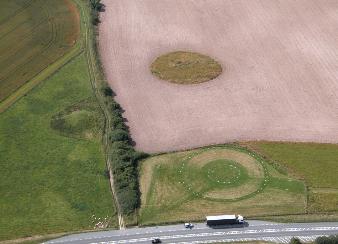


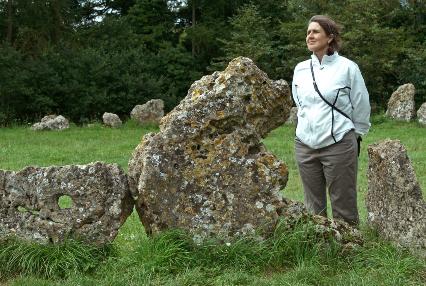

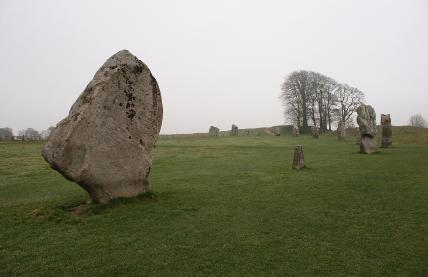

| Avebury |
| Some of the huge stones forming Avebury Henge which is 27 miles north west of my home in nearby Andover. |




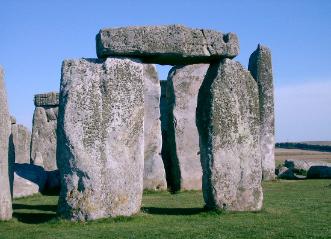
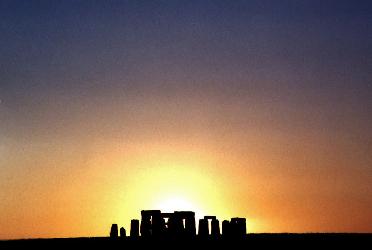


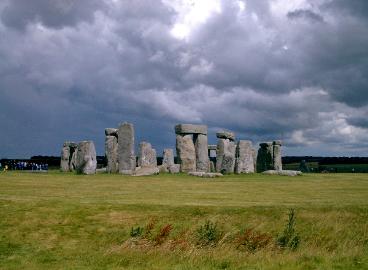

| STONEHENGE |
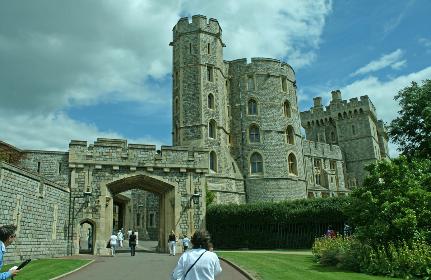
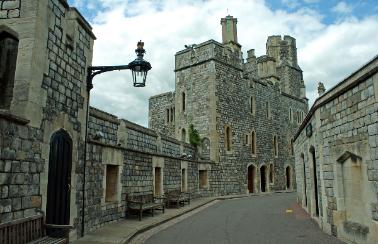
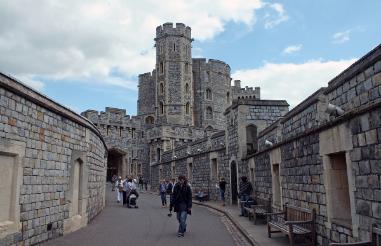
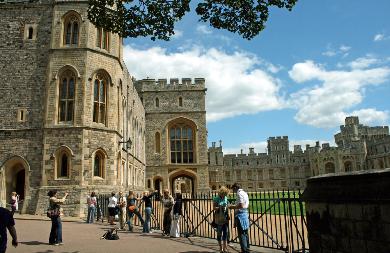
| WINDSOR CASTLE |
| Stonehenge was a place of burial from its beginning to its zenith in the mid third millennium B.C. a domain of the dead. Radiocarbon dating of human bones has put the date of the site 500 years earlier than previously estimated, to around 3,000 BCE. |
| Stonehenge evolved in several construction phases spanning at least 1,500 years. There is evidence of large-scale construction on and around the monument that perhaps extends the landscape's time frame to 6,500 years. |
| Archaeologists have found four, large Mesolithic postholes which date to around 8000 BC, beneath the nearby modern tourist car-park. These held pine posts around 0.75 metres (2 ft 6 in) in diameter which were erected and eventually rotted in situ. Analysis of animal teeth found at nearby Durrington Walls, thought to be the 'builders camp', suggests that as many as 4,000 people gathered at the site for the mid-winter and mid-summer festivals; the evidence showed that the animals had been slaughtered around 9 months or 15 months after their spring birth. Strontium isotope analysis of the animal teeth showed that some had travelled from as far afield as the Scottish Highlands for the celebrations. |
| I feel like Stonehenge is my home, having been born in our 500 year old cottage just 17 miles east of the henge. The longer I live so far away in Connecticut, the more I feel I want to be there - Colin, Jan 2016 |
| Stone Circle, Cornwall, England. Location unknown - contact |
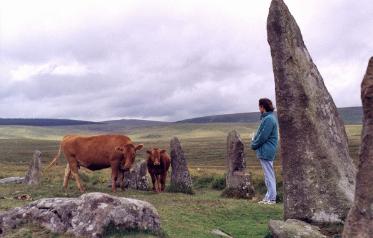
| Spinsters Rock, on Darttmoor, Devon is a Neolithic burial chamber erected around 3500-2500 BC. This chamber probably contained many burials |
| Above and below right, The Rollright Stones circle site in Oxfordshire, England. Resistivity and magnetometry surveys undertaken during the 1980s revealed four magnetic anomalies within the centre of the circle, possibly representing "pits related in some way to local ground surface undulations and the presence of localised burning. The stones circles, also known as 'The Kings Men' is dated ats late Neolithic or Early Bronze Age in British prehistory. |
| Rollright Stones, Oxfordshire, England. |
| Rempstone stone circle (grid reference SY994820) is a damaged stone circle near Corfe Castle in Dorset. It is located next to the B3351 road on the Isle of Purbeck. The Rempstone stone circle in an incomplete stone circle which lies in a wood just south of the Corfe Castle |
| Windsor Castle, Windsor, London residence of Queen Elizabeth. The original castle was built in the 11th century after the Norman invasion by William the Conqueror. Since the time of Henry I, it has been used by succeeding monarchs and is the longest-occupied palace in Europe. |
| One of the best known prehistoric sites in Britain, it contains the largest stone circle in Europe. A place of religious importance to contemporary Pagans. Constructed around 2600 BCE,during the Neolithic, or 'New Stone Age. Its original purpose is unknown.The henge is less than a mile away from Silbury Hill and West Kennett Longbarrow, sites going back 4,000 years. |
| While construction of the timber monument was probably earlier, the ditch has been dated to between 2470 and 2000 BC, which would be about the same time as, or slightly later than, construction of the stone circle at Stonehenge.[8] Radiocarbon dating of artifacts shows that the site was still in use around 1800 BC. Nearby burial mounds. |
| These are ancient Round Barrows known as 'The Seven Barrows, at Litchfield, Hampshire. Known also as Tumuli. In the British Isles, round barrows generally date to the Early Bronze Age although Neolithic examples are also known. Later round barrows were also sometimes used by Roman, Viking and Saxon societies. |
| This Roman Floor was discovered at Mottisfont Abbey in Hampshire. It is displayed at Old Sarum Castle. |
| Silbury Hill emerging from the early morning mist, on the edge of the Wiltshire Downs. |